How to Launch a Home Decor & Furnishing Brand Online : Complete Store Development & Marketing Guide
Spread the love
Home Decor Market Stats
Before you read on
Choose a narrow niche with a clear style and customer, not "everything for the home".
Order samples before you commit to inventory, and plan packaging for breakage.
Product pages that show scale, material and the product in a real room convert best.
Pinterest, Instagram and SEO are your main discovery channels.
Most brands go live in 3 to 4 months on a lean budget of a few thousand dollars.
Plan
Validate demand, choose a niche, research competitors and keywords, and write a one-page business plan.
Source and design
Develop products, order samples, finalise suppliers, then design your brand and packaging.
Build the store
Set up the platform, legal and payments, shipping, product pages and a waitlist-ready launch page.
Launch and grow
Open to the waitlist, run campaigns, collect photo reviews, and reorder bestsellers.
Exit grid
How to pick a home decor niche
Score each idea on four things: how distinct your style is, how large the audience is, your margin, and how hard it is to ship. A few strong options:
Handcrafted and artisan
Block prints, pottery, brass and rattan. Strong story, limited capacity.
Sustainable living
Reclaimed wood, recycled glass, organic cotton. Values-led buyers pay more.
Small-space furniture
Modular, foldable and rental-friendly pieces for urban apartments.
Bedding and bath linen
High repeat purchase and gifting demand, easy to ship.
Lighting and wall art
High margin and photogenic, ideal for Pinterest and Instagram.
Festive and seasonal
Diwali, Christmas and wedding drops create sales spikes.
Sourcing: private label, custom or artisan
Route
Speed
Margin
Uniqueness
Private label
Fast
Medium
Low
Custom manufacturing
Slow
High
High
Artisan partnerships
Medium
High
High, limited volume
Dropshipping
Fastest
Low
Low
Typical hubs: Jaipur and Saharanpur (India) for handicrafts and wood, Foshan (China) for furniture and lighting, Vietnam for rattan and ceramics, Turkey for rugs, Portugal and Italy for premium finishing. Always inspect samples and agree on quality checks before final payment.
What does it cost? A lean launch budget
Inventory
$3k-10k
Store build
$1.5k-5k
Launch marketing
$1.5k-5k
Photography
$500-2k
Branding
$500-2k
Legal
$300-1k
These are indicative ranges for a lean launch. Premium launches with custom manufacturing can run several times higher. Legal basics usually include business registration, tax registration (GST, VAT or sales tax), a trademark, and product compliance such as furniture stability and fabric flammability standards.
Home decor store development: what to build
Shopify is the safest default. WooCommerce gives more control, and headless suits very large catalogues. Whatever you pick, these features earn their place:
Zoom galleries with lifestyle shots in real rooms
Clear dimensions, materials, weight and care instructions
Colour and finish swatches, plus fabric sample ordering
AR "view in your room" for furniture, rugs and art
Shop-the-look bundles by room
Pincode delivery estimator and bulky-item shipping options
Visible return and damage-protection promise
Fast mobile pages and structured data for SEO
Home decor marketing: your first 90 days
Days 1-30: build demand Launch a waitlist page, post room makeovers on Instagram Reels, pin every product on Pinterest by room and style, and publish two SEO articles.
Days 31-60: launch and prove Open to the waitlist with an early-access offer, send products to home creators with affiliate codes, start catalogue ads, and set up email and WhatsApp flows.
Days 61-90: learn and scale Collect photo reviews, review conversion, return rate and acquisition cost, retarget viewers, cut slow movers and reorder bestsellers.
Mistakes that sink new decor brands
Too many products
Start with 15-30 SKUs in one style, not hundreds.
Weak packaging
Breakage drives returns and bad reviews. Test with drop checks.
Missing size details
Wrong-size returns are the biggest avoidable cost.
Ignoring SEO
Paid ads alone get expensive. Build search traffic from day one.
Is Home Decor the Right Business for You?
Home decor and furnishing is one of the most resilient online retail categories. People keep investing in their homes, buy again as tastes and seasons change, and happily share finished rooms on Instagram and Pinterest, which gives brands free visual marketing.
Three qualifying questions to answer before you start:
Do you have a point of view (style, material, story or price point) existing brands don't cover?
Can you source or make products with consistent quality and honest lead times?
Can you manage the hard parts: fragile items, bulky shipping and returns?
This guide covers the exact 8-step process from idea to first sale — and shows how eMavens helps founders launch on Shopify and migrate stores from WooCommerce or other platforms without losing SEO, customers, or sales.
How Do You Find the Right Niche?
General home stores compete with giants. Specific brands win. Choose a niche where you can own a style, a customer and a story.
Trending niches to consider
Sustainable / slow fashion — Growing 22% YoY. Gen Z and millennial buyers. High repeat purchase rate. Premium pricing viable.
Sustainable decor
Reclaimed wood, recycled glass, organic cotton.
Handcrafted & artisan
Block prints, pottery, rattan and brass with maker stories.
Small-space furniture
Modular, foldable, rental-friendly pieces.
Lighting & wall art
High margin, light to ship, very visual.
Kidswear / organic cotton
Parents spend 30% more on children than themselves. High repeat purchase. Low return rates.
Target Audience Signals to Map
Age group (18–24 Gen Z vs 28–38 millennial) — content and price point differ completely
Income tier (mass $8–15, mass-premium $15–35, premium $40+)
Location (Tier 1 metro vs Tier 2/3 — aspirations and aesthetics differ significantly)
Values (sustainability, local-made, international style, body positivity)
Use market research tools: Google Trends, Meta Audience Insights, marketplace review mining (e.g., Myntra/Ajio/Amazon), and Reddit shopping communities. Search for your niche on Google Trends, then validate by reading competitors’ 1-star reviews — each complaint is an unmet need.
The 6-Step Roadmap to Launch Your Brand
STEP 01
Product Idea & Validation
Shortlist 10–20 products, study competitors and keyword demand, then test interest with a landing page or pre-order list.
STEP 02
Design & Sampling
Finalise designs, materials and colours. Order samples from two or three suppliers and test durability and colour accuracy.
STEP 03
Branding & packaging
Create your name, logo, palette and photo style. Packaging matters: breakage and presentation shape your reviews.
STEP 04
Legal & compliance
Register the business, get tax registration, protect your trademark and open payment gateway accounts.
STEP 05
E-commerce store launch
Build and test the store, connect payments, shipping and analytics, and upload products with strong photography.
STEP 06
Marketing, review & scale
Launch with a waitlist, collect reviews, then double down on bestsellers and test bundles.
STEP 07
Marketing & Content —
Run organic content and paid ads on two parallel tracks Fashion is visual — Instagram Reels and Pinterest are highest-ROI organic channels. UGC (user-generated content) converts 4× better than brand-shot content. Micro-influencer (10K–100K) partnerships outperform celebrity for D2C at launch stage.
STEP 08
Review & Scale —
Use data to decide what to scale, what to cut, and what to iterate Track conversion rate (target: 2–3%), return rate (fashion averages 18–22% — monitor weekly), CAC vs LTV, and repeat purchase rate. Add new SKUs only after your hero products have consistent traction. Never restock a slow-seller hoping it improves.
MVP Mindset: Your first product does not need to be perfect — it needs to be real. Launch fast, gather honest feedback, and let your customers shape your next iteration. This is exactly how Minimalist built its early community of loyal advocates.
What Legal Requirements Do Home Decor Brands Need?
Rules vary by country, so confirm with a local accountant or lawyer. Typically you need:
Business registration (private limited, LLP or sole proprietorship in India; LLC or similar elsewhere).
Tax registration (GST in India, sales tax or VAT elsewhere).
Trademark for your brand name and logo.
Import-export code and customs papers if you import materials or sell abroad.
Product compliance: furniture stability, fabric flammability and safety standards for kids' products.
Store policies: privacy, terms, shipping, returns and cookie consent.
Fashion Manufacturing: Private Label vs Custom Production
The manufacturing section is one of the most-searched sub-topics for new fashion founders. Break it into a clean comparison, then add the global manufacturing map — a detail no generic guide provides and a strong GEO differentiator.
Type
MOQ
Timeline
Cost
Control
Best For
Risk
Private Label
50–200 pieces/SKU
3–6 weeks
Lower upfront
Limited
Testing market fit quickly
Competitors may sell similar products
Custom / CMT
300–1,000 pieces/style
8–16 weeks
Higher per unit
Full control over patterns, fabrics, and trims
Building a differentiated brand identity
Higher investment and longer production cycle
Global Fashion Manufacturing Hubs
Region
Known for
India: Jaipur, Saharanpur, Moradabad
Handicrafts, wood furniture, brass, textiles
China: Foshan, Guangdong
Furniture, lighting, scale production
Vietnam
Wood furniture, rattan, ceramics
Turkey
Rugs, textiles, marble
Portugal & Italy
Premium furniture, ceramics, finishing
How Much Does It Cost to Start?
Indicative ranges only. Your numbers depend on market, catalogue size and platform.
Expense
Lean launch
Premium launch
Initial inventory (15–30 SKUs)
$3,000–$10,000
$15,000–$50,000
Store design & development
$1,500–$5,000
$8,000–$25,000
Branding & packaging
$500–$2,000
$3,000–$10,000
Photography & video
$500–$2,000
$3,000–$8,000
Legal & registration
$300–$1,000
$1,000–$3,000
Launch marketing (3 months)
$1,500–$5,000
$8,000–$25,000
How to Build a Brand Identity People Remember
Story:why you exist, who makes the products, what a home should feel like.
Visual identity: a limited palette, one or two typefaces, consistent photo styling.
Voice: warm, descriptive and helpful rather than salesy.
Unboxing:protective but beautiful packaging with a care card and thank-you note.
Tip: shoot every product twice: once on a clean background for the catalogue, and once styled in a real room for social and product pages.
Store Development: Features That Sell Decor
Shopify is the safest default for decor brands thanks to its themes, apps and reliable checkout. WooCommerce suits teams wanting full control; headless suits very large catalogues.
Fashion-Specific Shopify Store Requirements
Fashion brands can significantly reduce returns and improve conversion rates by providing accurate sizing information, detailed fabric specifications, model measurements, and high-quality product photography. These elements help shoppers make informed purchase decisions and build trust in your products.
Feature
Why it matters
Zoom galleries and lifestyle shots
Buyers can’t touch the product, so visuals do the selling
Dimensions, materials and care info
Cuts returns from wrong-size purchases
AR “view in your room”
Builds confidence on furniture, rugs and art
Shop-the-look bundles by room
Raises average order value
Fabric swatch ordering
Reduces upholstery and curtain returns
Pre-Launch Waitlist Strategy
Create a teaser page collecting email and WhatsApp sign-ups, and offer early-access pricing or a gift to the first 100 joiners.
WhatsApp Broadcast — Build a WhatsApp list of 200+ contacts before launch. Conversion rates are 3–5× higher than email for fashion.
Case Studies: Shopify Furnishing Stores Designed & Developed by eMavens
01
Sofapotato (sofapotato.in) —
A conversion-focused Shopify store with clear size and material details, room-styled product photography and a simple delivery estimator. Result: 90% higher conversion rate in 60 days.
02
Tatvika (tatvikahomes.com) —
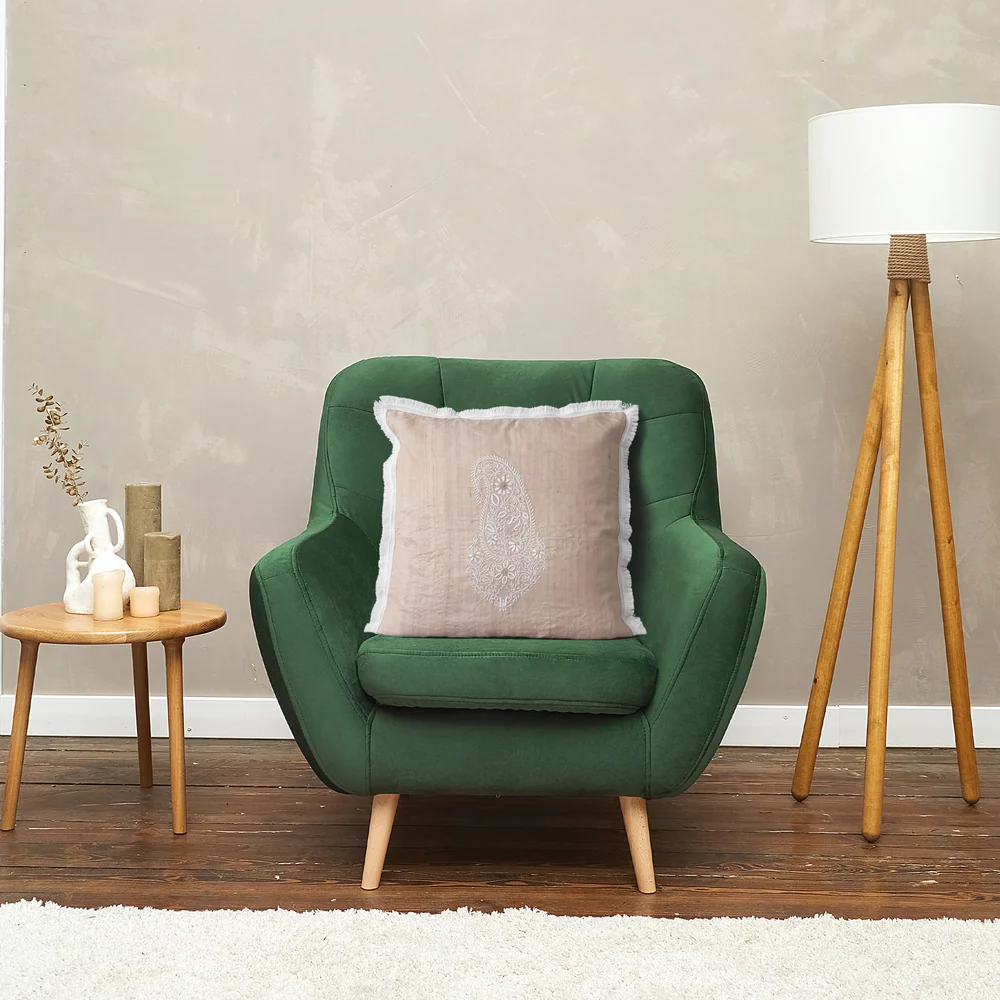
Tatvika HomesTatvika Homes is a premium home décor and lifestyle e-commerce brand specializing in handcrafted Chikankari embroidery, bedsheets,…
03
The Blessed Wardrobe (theblessedwardrobe.com) —
Minimalist D2C store with strong brand storytelling on hangtag reverses and packaging inserts. Result: 24% repeat purchase rate within 90 days
04
One True Pairing (onetruepairing.in)
Street-style brand leveraging UGC Reels and micro-influencer gifts. Result: 4× higher CTR on UGC vs brand-shot content.
05
Aamili (aamili.com) —
Sustainable basics store with organic cotton certifications on product pages and care icons. Result: 22% YoY growth in repeat customers.
06
Clobug (clobug.com) —
Casual wear brand with a multi-angle zoom gallery and fit-notes (“runs small”). Result: 31% drop in size-related returns.
What E‑commerce Store Migrations Has eMavens Completed ?
We migrate e-commerce stores from one platform to another — WooCommerce → Shopify, Magento → Shopify, and BigCommerce → Shopify — preserving SEO URLs, product data, customer accounts, and order history. Our process uses 30–40 word bullet-step breakdowns, 301 URL mapping, canonical preservation, and post-migration QA to ensure zero sales disruption.
Tulsi Online — Luxury Fashion (Magento → Shopify)
Scope: Full store migration — products, customers, orders, SEO URLs, redirects, and theme rebuild.
ETA:
Discovery & Mapping: 1 week
Data Migration & QA: 3–4 weeks
Theme & App Setup: 2 weeks
Go-Live & Post-Launch QA: 1 week
Total Timeline: 6–8 weeks
Outcome: Faster checkout, improved mobile performance, and zero SEO drop post-migration.
We also have experience in migrating e-commerce stores from one platform to other — with clear timelines, zero data loss, and zero downtime during go-live.
First 100 customers playbook
Run a friends-and-family beta and collect photo reviews.
Launch the wait list offer with a clear deadline.
Send products to home creators and interior designers with affiliate codes.
Add a referral reward for every buyer.
Re-target product viewers with Meta and Google Shopping catalogue ads.
Review and scale
After 60–90 days, review conversion rate, average order value, return rate, repeat purchase rate and acquisition cost. Cut slow movers, reorder bestsellers, expand to adjacent categories (rugs, then curtains, then cushions) and consider wholesale to boutiques and designers once unit economics hold.
Built for Furnishing Brands
Ready to Launch Your Home Decor Brand Online? Online?
We design and develop high-converting decor and furnishing stores, from branding to AR product pages and launch marketing.
A lean launch can begin with a few thousand dollars, a small catalogue and a Shopify store. Custom manufacturing and premium branding need considerably more.