Home » Blog » Frequently Asked Questions by E-Commerce Startups – ECommerce FAQs
Frequently Asked Questions by E-Commerce Startups – ECommerce FAQs
Spread the love
E-Commerce Portal Start-Up Queries
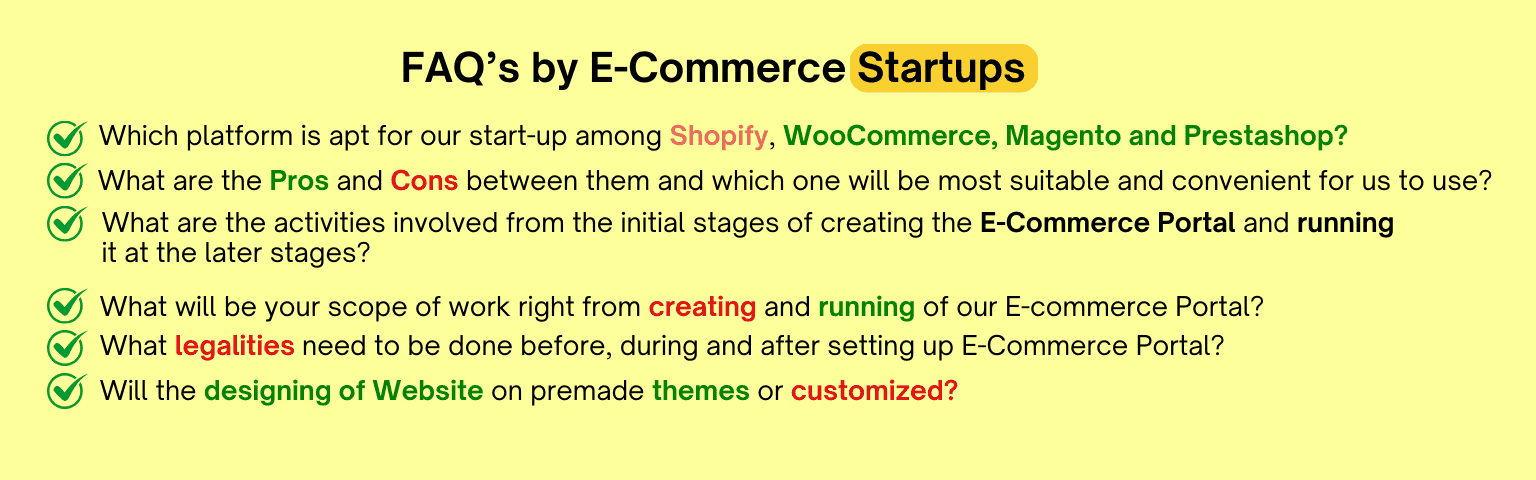
1. Which platform is apt for our start-up among Shopify, WooCommerce & Magento ?
The answer really depends on three factors: budget, expected traffic, and comfort with technology.
Shopify is the easiest way to begin: simply sign up and launch. It manages hosting, security, and scaling for you, so if you want a setup that you do not need to fuss with, Shopify is for you. On the other hand, this convenience comes with recurring monthly fees and limited customization.
WooCommerce is most suitable if you are already running a WordPress site and want complete control. It is cheap and leans toward flexibility, but you must update, secure, and optimize it yourself (or else pay for that!). It is the best for small-to-medium-sized stores that do not expect to become very big very fast.
2. What are the pros and cons between them and which one will be most suitable and convenient for us to use?
Picking an eCommerce platform? Don’t rush this decision.
Think about what kind of business this will be, the budget, and how comfortable things get with technology.
Shopify
The good: Sets up in hours. Everything’s handled automatically—hosting, security, updates. Perfect for getting started without technical headaches.
The catch: Monthly fees add up fast. Started at $29, but apps and fees push it closer to $100. Customization costs extra.
WooCommerce
The appeal: Completely free and builds whatever’s needed. Great for WordPress users who want full control.
The reality: Constant maintenance required. Sites go down, run slow, and break after updates. Becomes a part-time IT job.
Magento
The power: Handles massive catalogs, multiple countries, complex rules. Built for serious scale.
The cost: $50,000+ to start properly. Needs skilled developers and expensive hosting.
3. What are the activities involved from the initial stages of creating the E-Commerce Portal and running it at the later stages?
Getting started means getting a domain, creating a logo, building the website, finding hosting, and setting up payments. These are the basic pieces needed to start. Next is adding shipping tools, tax systems, and organizing products with proper categories and pricing. This makes everything actually work.
The store needs products with good photos, clear descriptions, and basic pages like “About Us” and policies. Without this content, people won’t buy anything.
Getting visitors requires SEO work, social media, and advertising to drive traffic to the site.
When orders come in, they need quick processing, automatic invoices, shipping coordination, and customer support.
The work continues with regular updates, checking what’s working, fixing security issues, and adding new products. There’s always something to do.
4. What will be your scope of work right from creating and running of our E-commerce Portal?
Look, we’re not just building your store and leaving. We’re staying around for the whole thing – from day one when you’re starting out to years later when you’re doing really well. That means when things break, we fix them. When updates come out, we take care of them so you don’t have to think about it. And we’re always making changes to make your store work better – new stuff, cleaner looks, customers who are happy.
But here’s the thing – having a great store doesn’t help if nobody finds it. So we’re going to get you showing up when people search on Google, post things on social media that people like, and run ads that bring in real customers who buy things.
All that boring computer stuff that keeps store owners worried? Security problems, site problems when you get busy, keeping everything working when other sites go down – that’s our job now. You work on what you’re selling, we’ll handle everything else.
The whole point is simple: make your store work well, make you more money, and keep things growing. That’s what we’re here for.
5. What legalities need to be done before, during and after setting up E-Commerce Portal?
First, make your business official. Pick sole proprietorship, partnership, LLP, or private company. Each has different rules and costs.
Get GST registration. It’s paperwork, but you need it. Tax authorities want to know you exist and follow their rules.
For online payments, banks want your documents, bank verification, signed agreements, and RBI compliance. Start this early – it takes time.
Once live, follow customer protection laws, keep data safe, respect cyber laws and copyrights, have clear return policies, and file taxes on time.
Do this right from the start. It saves you from legal trouble later. Nobody wants government notices because they skipped the legal basics.
Get it sorted properly so you can focus on making money instead of worrying about problems.
6. Will the designing of Website on premade themes or customized?
You will get two main ways to design your website – buy a ready-made theme or build something completely from scratch.
Ready-made themes are pretty simple. You pay a small amount, download it, and your site looks decent in a few hours. They come with everything already set up – colors, layouts, buttons. It’s cheap and fast. But here’s the thing – your site will look similar to thousands of others using the same theme. Want to change something major? Good luck with that.
Custom design means starting with a blank page and building exactly what you want. Your colors, your layout, your features. Nobody else will have a site that looks like yours. You can add whatever crazy feature you dream up. Want a purple checkout button that plays music we can do
Custom costs way more money and takes way more time.
So what should you pick? If you’re just starting and money’s tight, go with a theme. Get your business running first. If you’ve got bigger plans and want to look different from everyone else, spend the extra money on custom design.
Most people start with themes and upgrade later when they’re making more money. Nothing wrong with that approach.
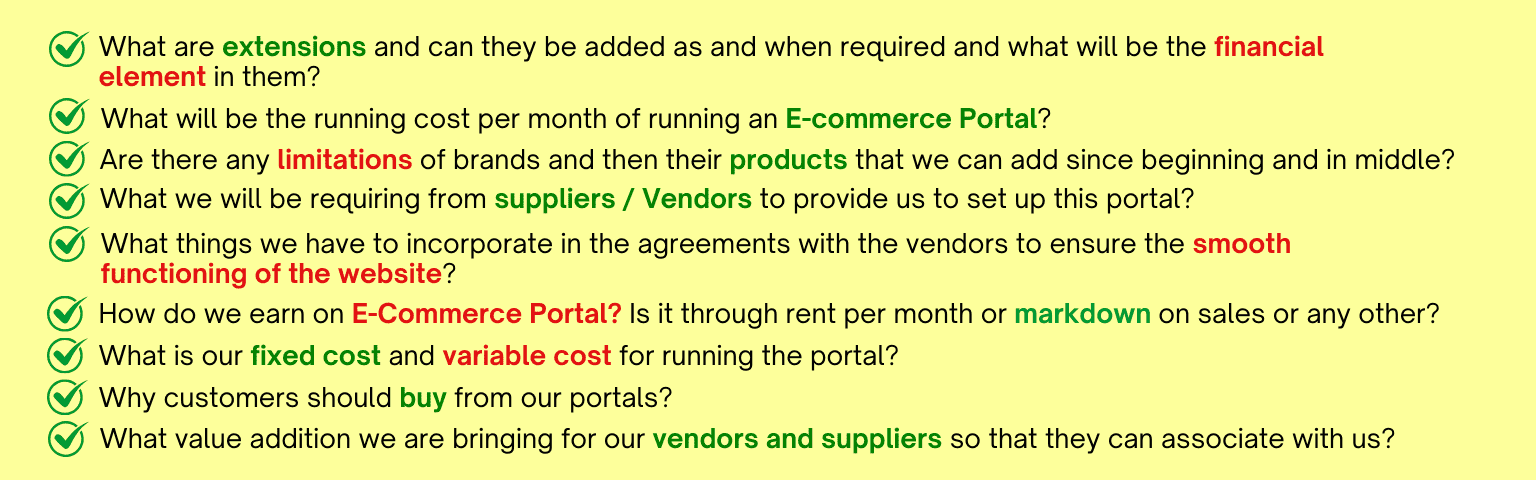
7. What are extensions and can they be added as and when required and what will be the financial element in them?
Extensions are extra tools you can add to make your website do more stuff. You can put them in whenever you need them for your business. Like maybe you want to add new ways for people to pay, better shipping choices, ways to get more customers, or help desk features. Some of these tools cost nothing, others you have to pay for.
The price depends on who makes it and what it does. When you’re starting with a basic online store, you probably don’t need the expensive ones. But when your business gets bigger, you might want to buy the better tools to make things work smoother and give customers a nicer experience.
8. What will be the running cost per month of running an E-commerce Portal?
The monthly cost of running an online store changes based on what you use and how much power you need. With WordPress and WooCommerce, you don’t spend much because it works fine on basic shared hosting, usually around ₹1000 each month. But Magento is different – it needs way more computer power and better speed, so you need at least a 4GB VPS server, which costs a lot more every month.
You also have to pay for other things like SSL security, keeping your domain name, protecting against hackers, and updating tools when needed. So your monthly bill depends on what technology you pick, what kind of server you get, and how big you want to grow.
9. Are there any limitations of brands and then their products that we can add since beginning and in middle?
There are no limits on how many brands or products you can put in your online store, whether right at the start or later when you’re already running your business. The system lets you add as much as you want whenever you want. This means you can begin with just a few things and slowly add more brands and products when your business gets bigger. But you need to make sure you have enough server space, good database setup, and organized product layout so everything works well when you have tons of items to manage.
10. What we will be requiring from suppliers / Vendors to provide us to set up this portal?
To get the online store working, suppliers need to give you complete product details in the right CSV file format, plus good quality product photos for the listings. You also need a written contract with suppliers that spells out rules, terms, and what everyone has to do. If you want to run a marketplace setup, you’ll need a paid add-on for handling multiple vendors, plus extra setup and custom work. This costs more money depending on how complicated things get and what features you need to manage all your vendors properly.
11. What things we have to incorporate in the agreements with the vendors to ensure the smooth functioning of the website?
For smooth functioning of your e-commerce website, vendor agreements should include clear terms on product quality, pricing, commission, and payment timelines. They must also cover packaging, delivery responsibilities, return and refund policies, and GST/tax compliance.
Additionally, include liability clauses to safeguard against disputes or defective products, along with termination conditions. You can follow standard marketplace formats or consult a law firm to create customized, legally sound agreements.
12. How do we earn on E-Commerce Portal?
Online stores pull in cash through lots of different tricks. The biggest money maker is grabbing a piece of every sale, where the store takes a tiny bite out of whatever people buy. This setup rocks because when sales go up, money flows in automatically. These platforms also squeeze monthly rent payments out of sellers who want to hawk their junk on the site. Another goldmine is renting out billboard space, where businesses fork over cash to splash their products all over the homepage. Stores can also milk extra bucks from fancy add-on stuff like lightning-fast shipping, pushing certain products harder, or sticking items right where shoppers’ eyeballs land first. Sure there’s a bunch of ways to grab money, but that percentage cut from transactions stays the bread and butter that keeps the lights on.
13. What is our fixed cost and variable cost for running the portal?
The fixed cost of running an e-commerce portal mainly includes the one-time design and development charges, along with setup and initial integrations. The variable costs are recurring expenses such as website hosting, digital marketing campaigns, payment gateway charges, logistics, and regular maintenance or updates.
These ongoing costs vary depending on traffic, sales volume, and the scale of operations. Together, they determine the overall monthly and yearly running cost of your portal.
14. Why customers should buy from our portals?
There are good reasons why people will shop at your store instead of others:
Great Shopping Experience – The website works fast, looks clean, and stays safe. People can find what they want quickly, buy things without problems, and pay however they like. No headaches or confusion.
Real Quality Products – People today hate getting fake stuff. When you sell only genuine, good quality items, customers trust you more and keep coming back for years.
Lots of Different Products – From basic things people need every day to special hard-to-find items, your store has it all. Customers get everything they want in one place, including stuff they can’t find anywhere else.
Help When Needed – Real people answer questions, handle returns, and fix problems after someone buys something. When customers know someone will help them, they feel better about spending money.
Fair Prices – Nobody wants to overpay. Good prices, regular sales, and money-saving deals make people happy while still getting quality stuff.
The bottom line is simple – your store gives people what they really want: trust, easy shopping, lots of choices, helpful service, and prices that make sense. That’s what keeps customers happy today.
15. What value addition we are bringing for our vendors and suppliers so that they can associate with us?
Suppliers are what make any online store actually work, and we know how to treat them right. We don’t just use them – we build real relationships that last for years. We sit down with suppliers, listen to what they need, and figure out how everyone can make more money together. When we work with lots of different suppliers, everything runs better and nothing gets stuck.
Paying suppliers on time isn’t just nice – it keeps them happy and wanting to work with us. Nobody likes waiting for their money, and when suppliers know they’ll get paid fast, they put in their best effort. Our store helps suppliers reach way more customers than they could on their own, gives them chances to grow bigger, and keeps everything steady for everyone.
Here’s what suppliers get when they work with us:
More customers than they could reach alone
Everything out in the open – no hidden tricks
Better planning because they know what’s selling
Help promoting their products to more people
Real numbers showing how their stuff is doing
Money in their account when promised
It’s simple – when suppliers do well, that’s how business should work
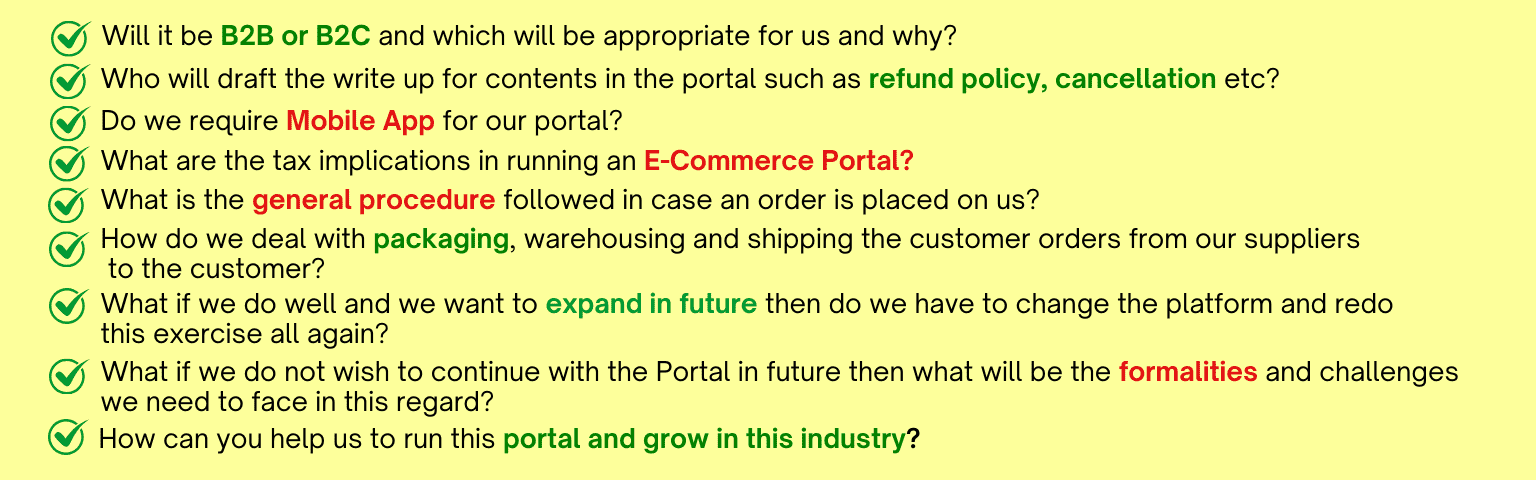
16. Will it be B2B or B2C and which will be appropriate for us and why?
Both selling to businesses and selling to regular people work for online stores, but you need to pick based on what makes sense for your situation.
When you sell to other businesses, you’re dealing with companies, wholesalers, or retail stores that buy lots of stuff at once. These relationships take time to build but the orders are way bigger. When you sell straight to customers, you’re talking to normal people buying things for themselves. Sales happen faster, more people know your name, and everything moves quicker. Want huge orders from business deals? Go the business route. Want to get your products in front of tons of regular shoppers? Sell directly to people.
17. Who will draft the write up for contents in the portal such as refund policy, cancellation etc?
Writing important store policies like return rules, cancellation terms, privacy protection, and service conditions is usually the job of the store owner or their lawyer.
Most businesses grab basic templates from legal websites to get started, but these need to be changed to match how the company actually works, what they sell, and what customers expect. It’s really smart to get a lawyer to check the finished policies to make sure they follow all the laws and rules for your type of business. Doing this right doesn’t just keep you out of legal trouble – it also shows customers they can trust you and that you’re being honest with them.
18. Do we require Mobile App for our portal?
Yes, making a phone app for your online store makes a lot of sense these days. Since everyone has smartphones now, apps let customers shop faster, easier, and get a shopping experience that feels made just for them compared to regular websites. Phone apps keep people interested, get them buying again and again, and help build real connections with customers.
They also let businesses send instant updates, deals, and alerts that actually work. If people buy your stuff all the time or need to keep checking back, a phone app becomes really important. It can also handle special business stuff like understanding customers better, sharing information, or handling service requests.
There are some reasons that‘s why you require Mobile App for your portal:
Keep customers hooked and coming back.
Send deals and alerts regularly
Get people buying more often
Handle special business requirements.
Share useful information and reports
19. What are the tax implications in running an E-Commerce Portal?
In India, when you run an online store, there are tax rules you have to follow or you’ll get in trouble. First thing – you need GST registration no matter if you’re making lots of money or just starting out.
This goes for you and every person selling stuff on your site. Your store also has to do this TCS thing where you take an extra 1% from sales and hand it over to the government. Don’t forget you have to send in your GST papers every month and keep your income tax stuff organized or they’ll hit you with penalties. Every seller putting products on your site needs their own GST number too. Do all this right and your business runs without problems, you stay out of legal mess, and everyone trusts you more.
20. What is the general procedure followed in case an order is placed on us?
When someone buys something from the online store, things start moving right away with confirming the order and making an official bill for the customer. After checking that the payment went through and the customer information looks right, someone checks if the items are actually in stock and puts them aside.
Then comes getting everything ready to ship – finding the products, putting them in boxes, sticking labels on, and giving everything to the delivery company. Once it’s on its way, the customer gets tracking information and the order shows as “Shipped.” When everything gets delivered successfully, the order gets marked as “Done” and the customer gets a final receipt plus a request to leave feedback.
21. How do we deal with packaging, warehousing and shipping the customer orders from our suppliers to the customer?
When a customer buys something, the seller gets told right away about what was ordered. The seller has to wrap up the product using boxes and bubble wrap that the store boss gives them so nothing gets broken during shipping. After everything is packed up nice and has the right stickers on it, a delivery person comes by to pick it up along with the paperwork that matches the order number. Then the product gets taken to the customer through whichever delivery company was picked. This whole thing makes sure products get wrapped right, handled carefully, and delivered on time from the person selling it to whoever bought it.
22. What if we do well and we want to expand in future then do we have to change the platform and redo this exercise all again?
When your online shop explodes with traffic and you need to take care of way more buyers, time to grab something that won’t die on you. WordPress handles things fine at first, but slam it with thousands of people all trying to checkout together (we’re talking 3,000 to 4,000 or even crazier numbers), and boom – everything freezes up like a broken computer.
That’s when you know it’s time to jump ship to something like Magento or other bulletproof systems that just eat up massive crowds, stop your customers from wanting to throw their phones, and unlock all sorts of fancy new tricks. Making this switch means you’ll be tearing down and putting back together major chunks of your whole setup.
23. What if we do not wish to continue with the Portal in future then what will be the formalities and challenges we need to face in this regard?
If you want to shut down your online store later, first thing is to finish delivering everything people already bought so nobody gets angry and you don’t look bad. After that, you need to turn off new orders and tell everyone what’s happening – let your suppliers, vendors, and customers know you’re closing shop.
Make sure to pay back any money you owe or give refunds to people who deserve them. Last thing is to talk to your accountant or lawyer to handle all the paperwork for shutting down the business properly, like canceling your GST registration, getting clearance certificates, and filling out official closing forms.
24. How can you help us to run this portal and grow in this industry?
We can help you not just keep your online shop breathing but also completely wreck this brutal market. Our crew takes care of every damn thing your business needs to steamroll the competition—from boring daily bullshit to dragging in waves of new customers.
Here’s What We Really Handle:
Straight-Up Business Help: Tell you exactly what moves to make, stop you from getting hammered by lawsuits or government penalties, and help you blow up without crashing and burning.
Tech People Who Give a Damn: Watch your website every hour of every day, patch things up before they explode, and jump on disasters right away so your cash keeps flowing.
Rock-Hard Server Setup: Super fast hosting that stays online while your rivals’ websites are choking and dying.
Customer Hunting Machine: Make Google shove people toward your store, run all your social media accounts, pay for ads that actually work, and plaster your name all over the internet.
Money-Making Master Plans: Turn lookers into repeat buyers, figure out what’s raking in the cash, and draw up your roadmap to owning the whole damn industry.
25. How long will it take to deliver my order?
How quick your order shows up depends on where your house is, if we’ve got the item sitting around, and whatever shipping company covers your neighborhood. Usually we throw your stuff in a box and ship it out somewhere between 24 and 48 hours after you hit that buy button.
After it leaves our place, getting to you normally takes about 3 to 7 regular workdays if you live somewhere normal. Now if you’re stuck out in the middle of nowhere or some backwoods town, expect it to drag on longer since delivery trucks hate going to those spots. We’ll shoot you tracking info so you can obsessively check where your package is every five minutes until it lands on your doorstep.
Which e-commerce platform is best for your startup will depend on your spending limit and needs. Every platform has advantages and disadvantages of its own, so there is no one “best” platform. Starting with WordPress + WooCommerce is what the author suggests if you don’t need extensive features and expect low traffic. In addition, they offer thorough responses to 25 frequently asked questions concerning launching and managing an e-commerce portal, covering a wide range of topics including platform choice, legal concerns, marketing, and business growth.
In the end, a number of factors will determine your e-commerce startup’s success, so careful planning and execution are crucial.